

Coliving Founder Story, Case Study: Office to Coliving Conversion, Research on Intergenerational Coliving, Urban Regeneration and Everything Else Coliving

[Founder Story] 5 Lessons from Turning Homes into Coliving Spaces
By Maria Mayordomo, Founder of Cactus Coliving
Maria’s story is a beautiful reminder of something many of us in coliving learn the hard way: this business is not about rooms; it’s about energy, people, and intentional design. Too often, coliving gets reduced to a real estate model or a financial play, but in reality, the success of a space is shaped by far more human and emotional factors: the soul of the building, the resilience of the founder, the behavior of the first residents, and the boundaries needed to sustain long-term community. What I love about Maria’s reflections is that they capture the unspoken truths of building coliving, the invisible work, the personal growth, and the deep care required to turn a house into a home. We also did a podcast with Maria, you can listen to it here:
Now, in her own words, after converting three traditional Canarian homes into coliving spaces for digital nomads and remote workers, I’ve learned that building a coliving is about much more than design; it’s about people, energy, and belonging.
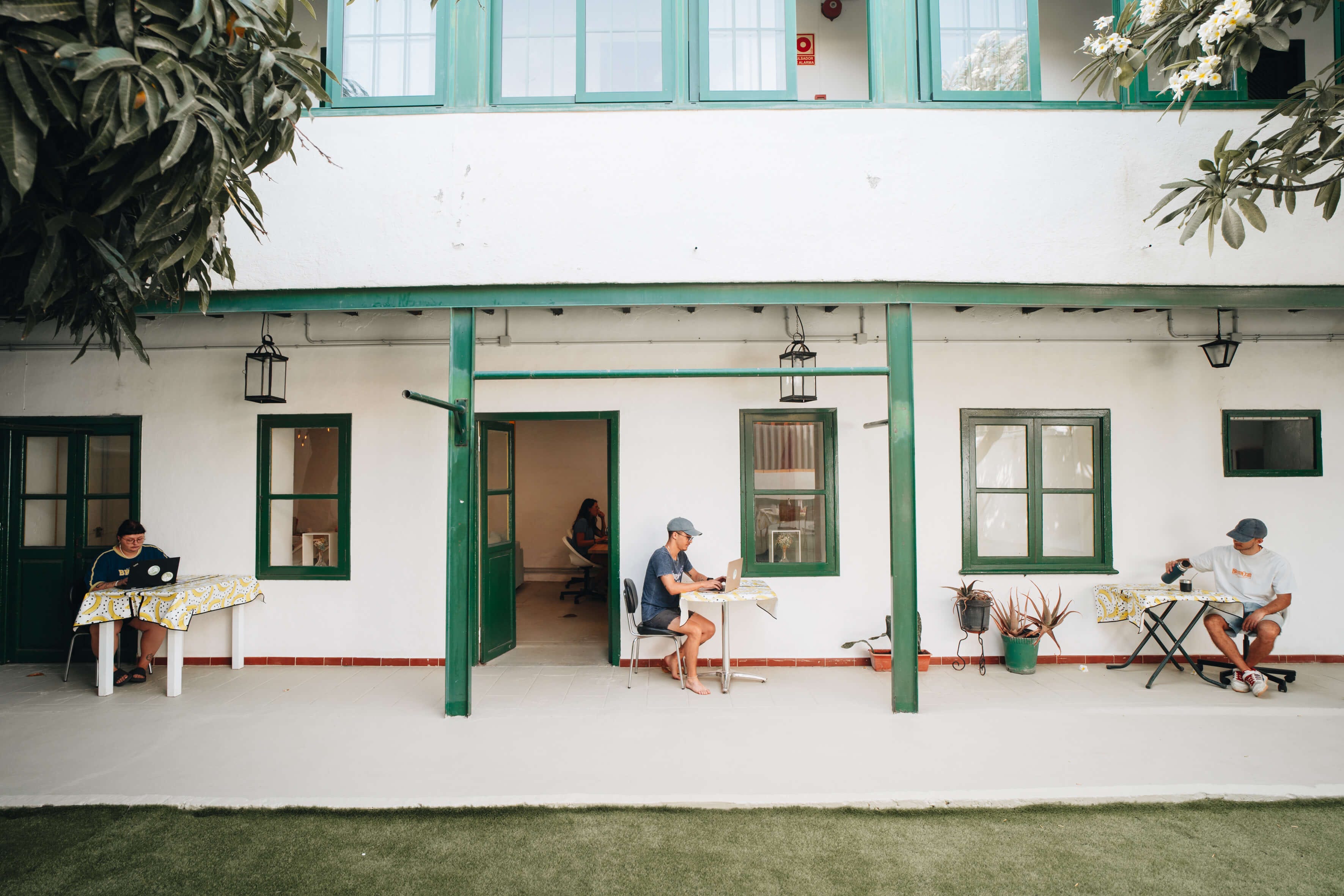
The building shapes the community: the layout, light, and flow of a house naturally influence how people connect. Every home has its own rhythm, or as my mom says, “Cada casa tiene su alma.”
Renovation costs more energy than money: budgets matter, but the real challenge is emotional resilience and managing delays, surprises, people, and stress.
Your first guests define the culture: early residents teach you how people actually live and work in the space, shaping everything from coworking setups to community activities.
Hosting requires boundaries: living with guests is beautiful, but sustainable hosting means protecting your energy and setting healthy limits.
Growth happens when you stop doing everything yourself: Scaling only works when you trust others, delegate, and build systems; coliving thrives when more hearts and hands are involved.
Running a coliving is not passive; it requires presence, care, and human connection. But if you’re called to build meaningful shared living, the work is absolutely worth it.
[Case Study] From Office to Coliving: Reimagining Underused CBD Buildings by Livko
Credit: Livko Living, Melbourne
As cities rethink the future of underperforming office buildings, Livko presents one of the most compelling real-world feasibility studies on converting CBD office assets into large-scale co-living communities.
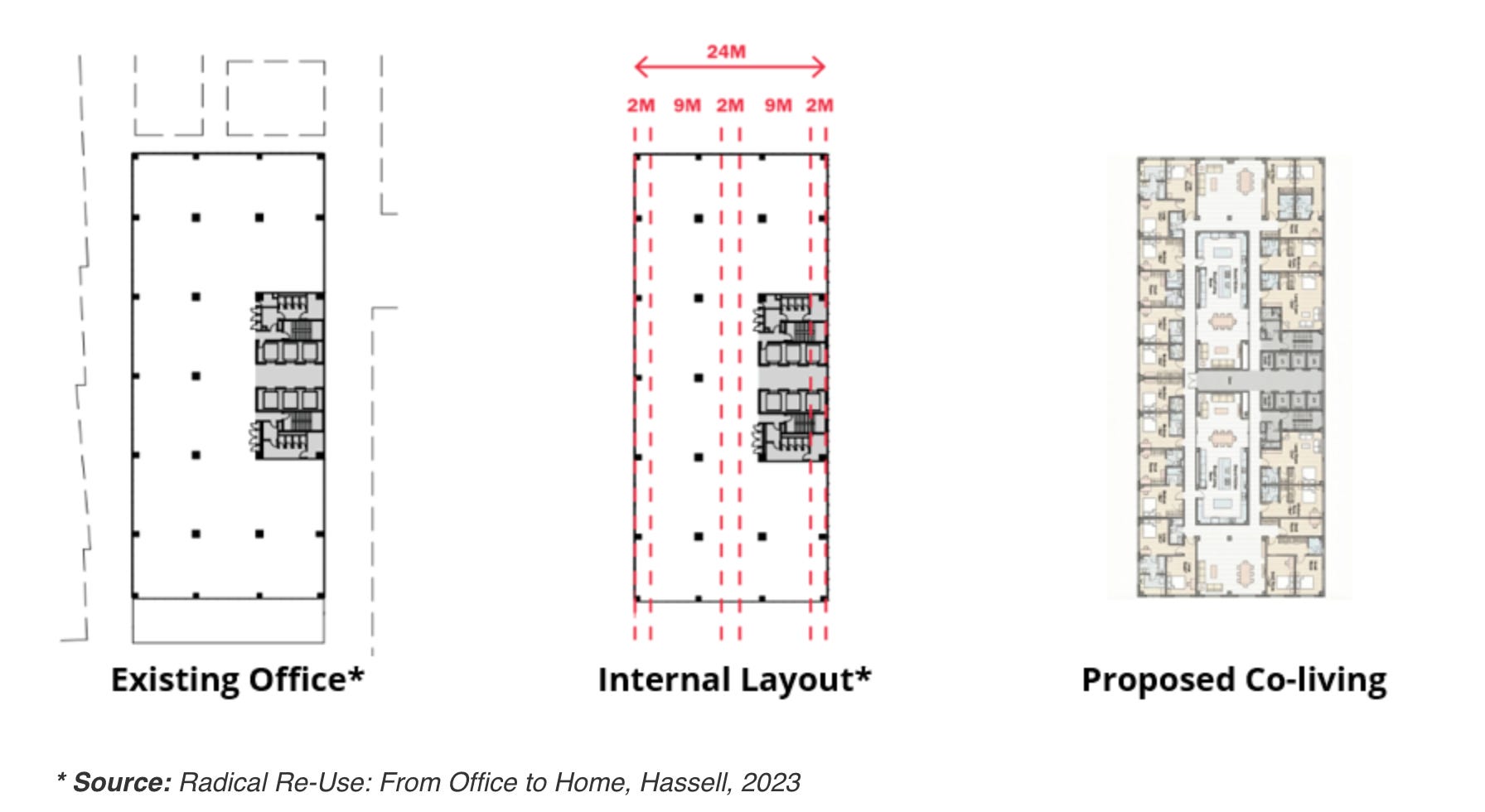
Their case study explores the repositioning of an office tower at 469 La Trobe Street, Melbourne, transforming it from a traditional commercial asset into a vertical neighborhood built for long-term urban living.
Rather than treating this as a typical acquisition-led development, Livko frames it as a strategic repositioning within existing ownership, unlocking value through a change of use, increased residential density, and hospitality-led operations, instead of relying on financial engineering.
A Vertical Neighborhood, Not Just a Conversion
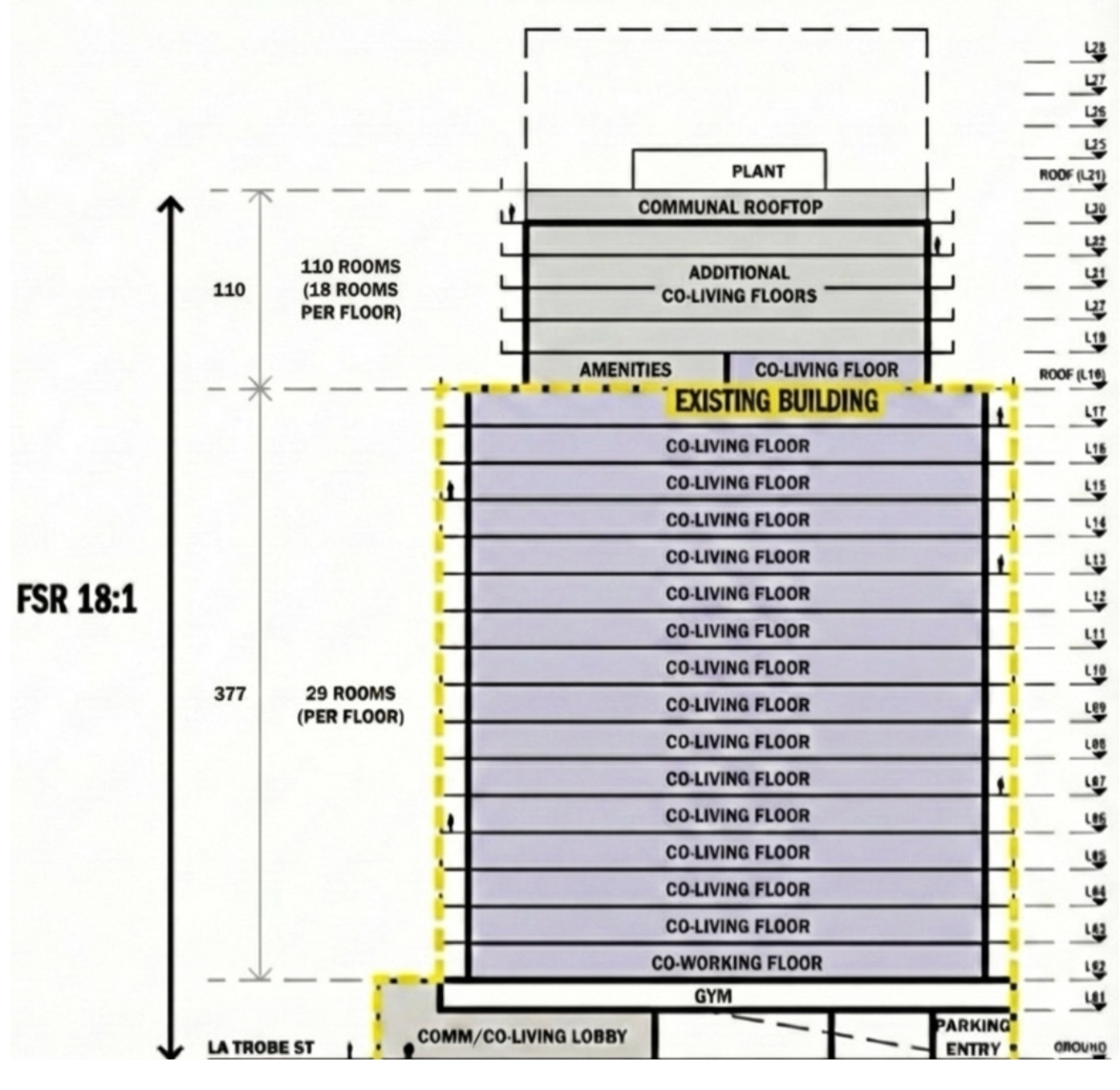
The proposed transformation reimagines the building as a stacked ecosystem for living, working, wellness, and community:
Former parking floors become a gym and wellness hub
A dedicated coworking floor serves both residents and external members
591 co-living rooms span renovated and newly added CLT levels
Shared kitchens, dining spaces, and communal floors support everyday connection
A rooftop terrace becomes the social heart of the building
This is not just adaptive reuse; it’s a shift toward designing buildings as lived systems, where financial performance flows directly from resident experience, shared infrastructure, and high space utilization.
The Economics Behind the Model
Livko’s feasibility outlines a project with:
Total Development Cost: ~$80.5M
Projected Stabilised NOI: ~$10.7M annually
Blended average rent: ~$2,069/month across 591 rooms
Ancillary revenue streams: coworking, gym, laundry, vending (~$1.4M/year)
Estimated stabilised cash-on-cash return: ~26.5%
Exit valuation projection: ~$225M
The study highlights how coliving’s operational density, diversified income, and hospitality-driven model can materially outperform conventional multifamily — when executed in the right ownership and urban context.
Beyond the numbers, this case study demonstrates something bigger:
Office buildings don’t have to stay obsolete
Value can be created through design, community, and operational strategy
Urban assets can evolve into human-centred living environments
Co-living can act as a credible solution to CBD vacancy and housing demand
It’s a powerful reference point for asset owners, investors, developers, and city planners exploring how to future-proof real estate in a post-office world.
[Research] Intergenerational Coliving & Urban Regeneration in Madrid
Credit: Irene de la Torre Page, University of Navarra (Master’s in Architecture)
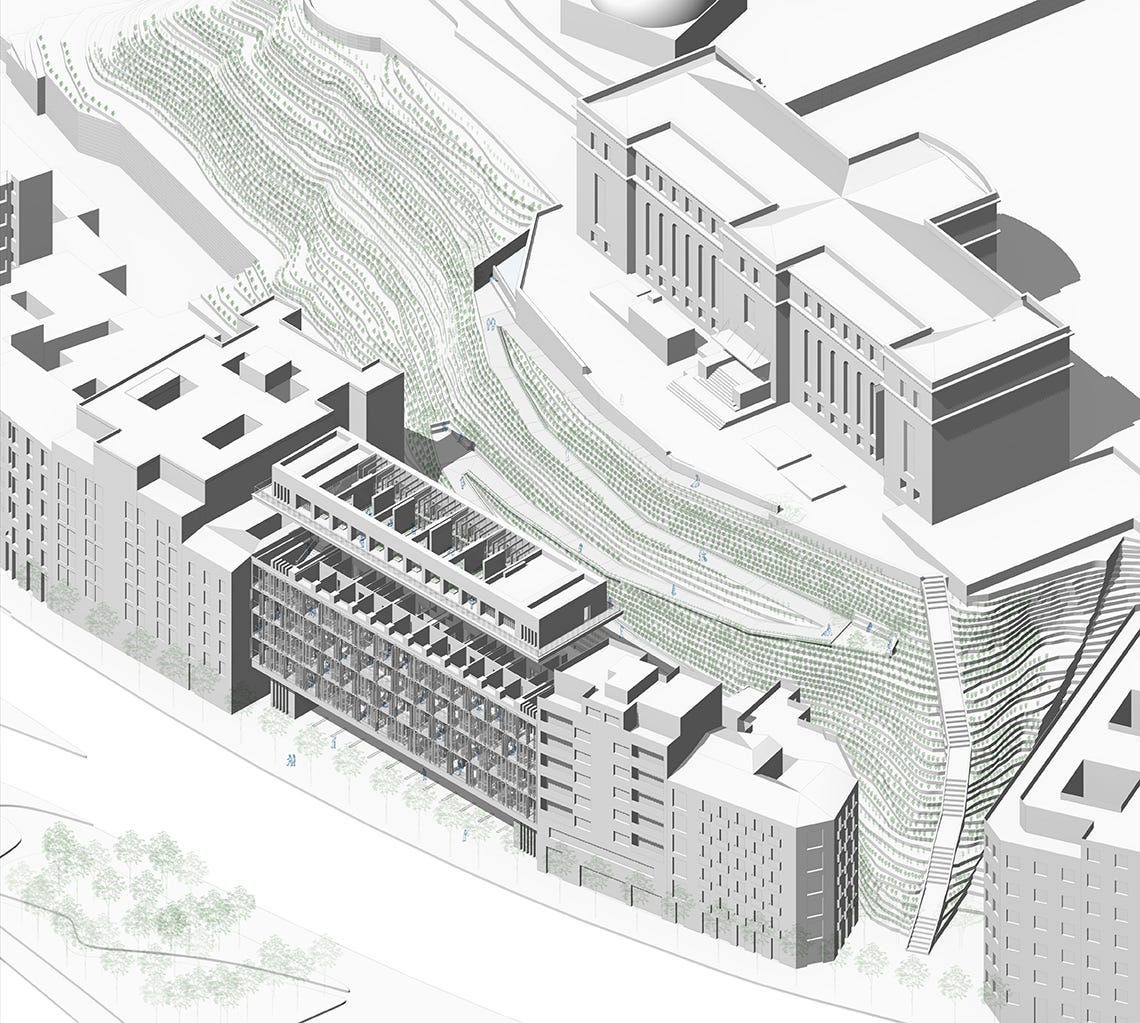
This thoughtful academic project explores a future-facing idea: intergenerational co-living as a response to urban loneliness, housing pressure, and social fragmentation in Madrid.
Located in the Retiro district, between Atocha Station and El Retiro Park, the proposal imagines a residential community that brings young people and elderly residents together, not just to share housing, but to share care, knowledge, daily routines, and green space. The project responds to two growing challenges in cities:
Young residents facing isolation and housing insecurity
Older adults experiencing loneliness, dependency, and loss of active roles
By combining architecture, nature, and community design, the proposal positions coliving as a tool for social connection, wellbeing, and mutual support, not just affordability.
A Coliving Model Rooted in Nature & Community
The design integrates:
Intergenerational apartments with flexible layouts
Coworking, gym, communal dining, laundry, and shared learning spaces
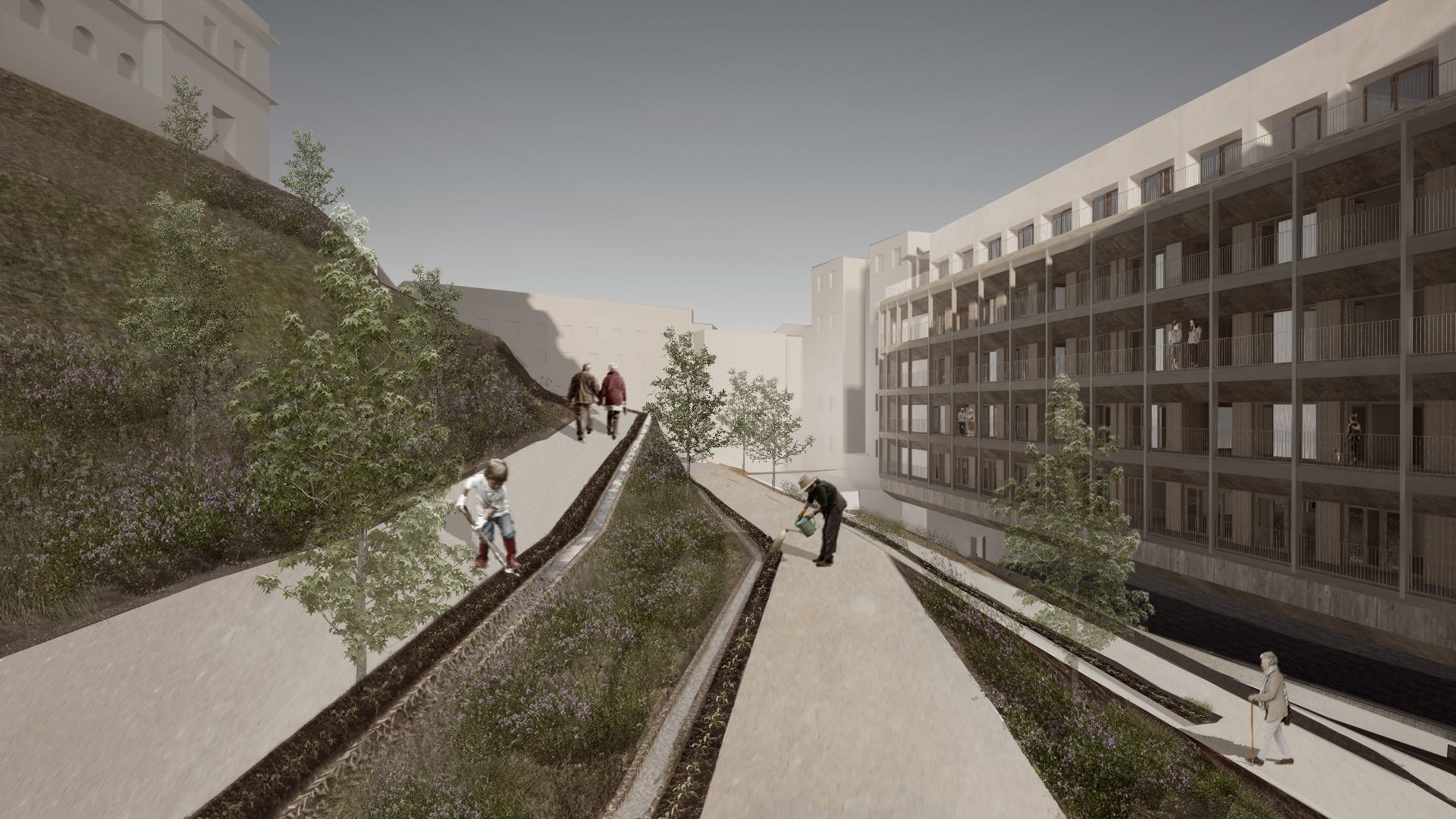
Community gardens, rooftop greenhouses, and urban agriculture zones
Accessible landscaped pathways, ramps, and green slopes that transform topography into livable public space
A continuous connection between private living, shared areas, and outdoor nature
Three housing typologies support different needs, from single residents to shared units, while open exterior galleries encourage casual encounters and everyday interaction.
Architecture as a Social Connector
Rather than treating housing as isolated units, the building is designed as a social and ecological ecosystem:
Open circulation spaces that encourage meeting and coexistence
Green roofs and gardens for food production, workshops, and community learning
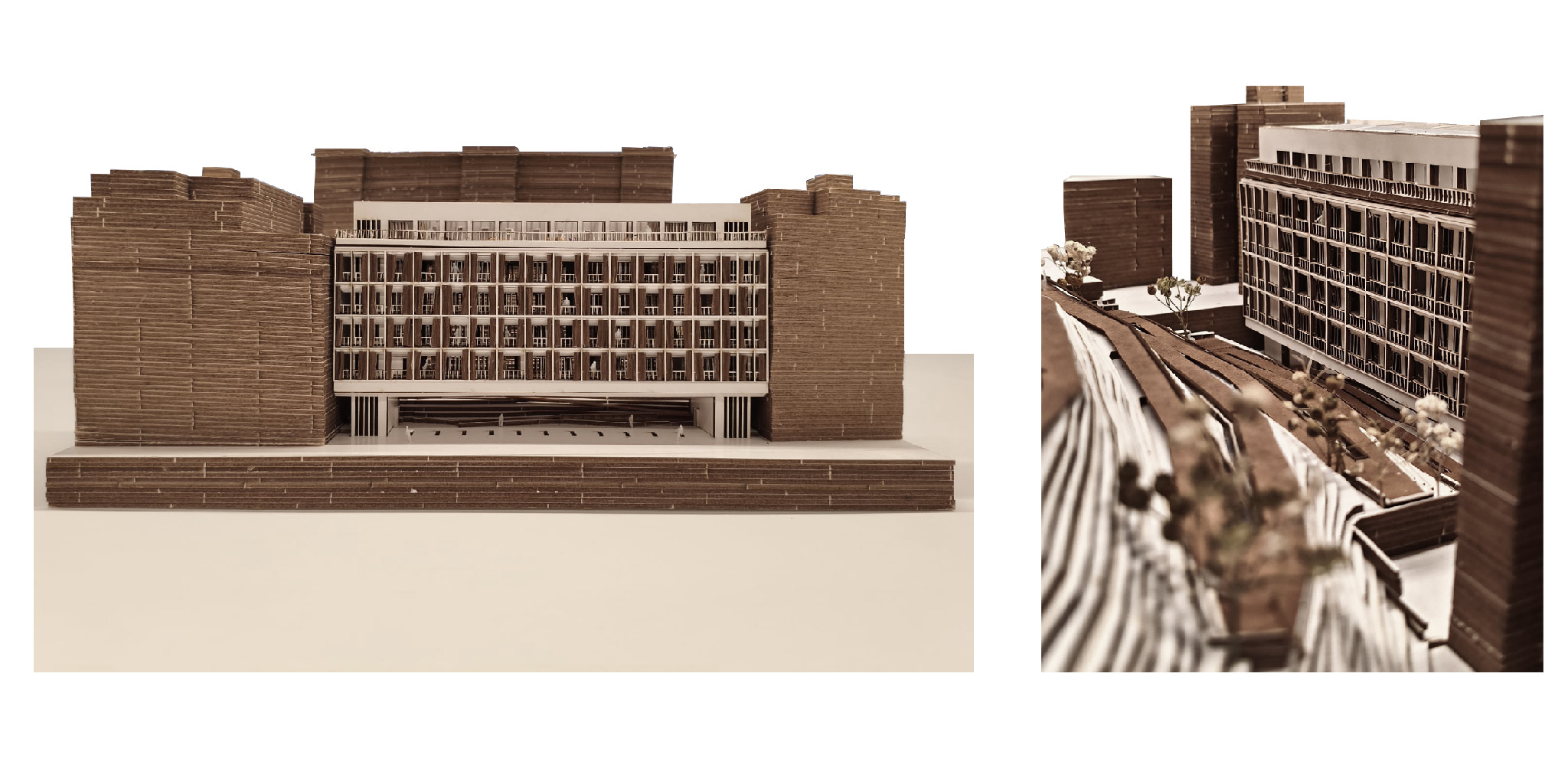
South-facing façades with adjustable wooden shutters to manage light, comfort, and identity
Public-facing ground and basement spaces that connect residents with the wider city
The building becomes a bridge between Atocha, El Retiro Park, residents, and the neighborhood, blending urban life, green space, and intergenerational care.
This project highlights an important evolution in shared living:
Coliving isn’t just for young professionals anymore
Intergenerational models may be one of the most meaningful social use cases of shared housing
Architecture can actively reduce loneliness, strengthen purpose, and build mutual support systems
Green space and nature are becoming core infrastructure for mental and emotional well-being.
It’s a powerful reminder that the future of coliving may be as much about care, dignity, and connection as it is about density and efficiency.
Everything Else Coliving
Development of co-living units expected to accelerate in 2026. In Australia, coliving has emerged as one of the hottest sectors in the commercial property market’s living sectors in 2025, with 2026 set to see strong growth, according to the latest research from Knight Frank. The firm’s The Co-Living Report, which includes insights from UKO tenancy data, found the total national supply has surpassed the 10,000-unit mark, taking into account units under construction and planned. Sydney is the bellwether for the asset class in Australia, accounting for more than 90% of completed schemes nationally, with 1,639 units in the market.
Coliving operator The Assembly Place debuts on the Catalist board with a 26.1% premium over the IPO price. The Assembly Place rose at its Catalist debut on Friday (Jan 23), which marks the second listing of a co-living operator on the Singapore Exchange. The counter rose as much as 45.7 percent above its initial public offering (IPO) price to S$0.335 in early trading before ending its debut at S$0.29 for a first-day premium of 26.1 percent. Total turnover was 17.3 million shares.
UKREiiF Announces The Shared Living Summit for UKREiiF 2026. The UK’s Real Estate Investment and Infrastructure Forum (UKREiiF) has confirmed that its 2026 event will host The Shared Living Summit, delivered in partnership with Housed.
Coliving, a phenomenon that is growing in Luxembourg. Coliving has gradually carved out a niche for itself in the Luxembourg real estate market, driven by the growing need for flexible housing options. This wasn’t a given in a market where properties are often privately owned.
The PIC opens its doors this Tuesday, January 20, 2026. The largest coworking and coliving ecosystem in France is launching in Clermont-Ferrand.
Co-Living: A modern solution to Australia’s housing crunch Co-living is emerging as a smart, modern alternative to traditional housing, offering safe and high-quality shared living spaces. Unlike student accommodations focused on socializing or parties, this model is designed for mature individuals navigating Australia’s tight housing market and seeking affordable, comfortable homes.

We hope you enjoyed this edition and wish you a great weekend ahead. Reply us with your thoughts on what more you want to read and if you have any feedback.
Mayank & Everything Coliving Team
PS: If you want us to cover anything, please mail it by replying to this email.